Guide
How to join a pool league

A pool league is the easiest way to play regularly against new people. You join a team, the team plays a match against another team once a week at a bar or pool hall, and the results count toward standings over a season. Most amateur leagues are handicapped, which means a newer player can compete with, and beat, a much stronger one.
You don't need to be good to join. You need to show up, learn the rules your league uses, and be a decent teammate.
How handicapped leagues work
The details differ from league to league, but the idea is the same everywhere: every player has a rating, and the rating decides what it takes to win a match.
- Each player has a skill level or rating. New players start with an estimate. After that, the rating moves up or down based on results and, in some leagues, on stats like innings per game.
- The handicap sets the race. When two players of different levels meet, the stronger player needs to win more games (or score more points) than the weaker player. A match might be a race where one player needs five wins and the other needs three.
- Teams play several individual matches. A team match is made up of one-on-one matches. The team that wins more of them, or more points, wins the night.
- Teams can't stack the deck. Many leagues cap the combined ratings a team can put on the table in one match, so a team of only strong players can't play all of them every week.
The result is that a beginner's win counts just as much as an expert's. That's what makes leagues so friendly to new players.
The league names you'll hear
Several national organizations run amateur leagues in the US. Each sanctions local leagues run by local operators, and each has its own rulebook and handicap system. You'll see these names on flyers and in reviews:
- APA
- The American Poolplayers Association. It runs team leagues in 8-ball and 9-ball using a skill-level handicap system it calls the Equalizer. Of the league names in the reviews and websites behind this directory, it comes up most often.
- BCA / BCAPL
- The BCA Pool League. It's run by CueSports International (CSI), with handicapped team play in 8-ball and 9-ball. Reviews and flyers often just say "BCA."
- CSI
- CueSports International, the organization behind the BCA Pool League and the USA Pool League.
- VNEA
- The Valley National 8-Ball Association, a league organization long associated with 8-ball on bar tables.
- TAP
- Another national league with handicapped team play, found in a number of areas.
Many pool halls and bars also run their own in-house leagues that aren't tied to any national organization. Those can be the most casual of all.
Which league is "best" mostly depends on which one plays near you, on which night, at a place you like. Most players simply join the league their friends or their local room plays in.
Finding a team
- Ask at the counter. Staff at a pool hall almost always know which leagues play there, on which nights, and which captains are looking for players.
- Look at the walls. Many rooms post league flyers, standings or a bulletin board near the counter.
- Go on a league night and watch. You'll see how it works, and you can ask a captain between matches whether the team has room. Captains are often glad to hear from new players, since teams need enough people to fill every match.
- Check the league's own website. National leagues list local operators, who can place you on a team that needs players.
- Start a team. If you have a few friends who play, a local operator can help you set up a new team at a home location.
Our pool leagues page lists pool halls and bars whose customer reviews or own website mention leagues, and names the league (APA, BCA, VNEA and so on) when the proof does. Each listing shows the review sentence or website note behind the claim.
What to ask before you sign up
- Which night does the team play, and what time do matches start?
- Where is the home location, and how often do you travel to other rooms?
- 8-ball, 9-ball or both?
- What size tables? Bar leagues often play on 7-foot tables; hall leagues may use 9-footers. See pool table sizes.
- What does it cost, and what does the money cover? Leagues usually charge something to join and something each week. Ask the captain or the operator for the current amounts.
- How long is a season, and is there a playoff?
- Where can I read the rulebook?
What a league night looks like
Every league runs its night a little differently, but a typical one goes something like this:
- Arrive early. Players show up before the start time to warm up on the league tables, check in and grab a drink.
- Captains set the order. The two captains decide who plays whom, one match at a time. In many leagues one captain names a player and the other picks someone to answer, with a coin toss to decide who goes first.
- Matches are played one-on-one. Each match is a race to a set number of games, based on the two players' ratings. Teammates watch, keep score and cheer.
- Someone keeps score. Usually each team keeps its own score sheet, and the two compare at the end of every match. Some leagues use an app instead.
- Coaching has rules. Many leagues let a teammate call a limited number of time-outs to give advice during a match. Others don't allow coaching. Know which before you start talking to a shooter.
- Results go in. At the end, captains sign off on the score sheets and the results go to the league operator.
A league night usually takes a few hours. It's competitive, but it's also social. Many people stay in a league for years more for the team than for the pool.
Tips for your first season
- Read your league's rules. League 8-ball rules often differ from the way you play at the bar, especially on scratches and the 8-ball. Start with how to play 8-ball and 9-ball rules, then read the league's own book.
- Don't worry about your skill. The handicap is there so you can win. Your early matches set your rating, so play your normal game.
- A house cue is fine. Plenty of league players use one. Pick a straight one, and think about a cue of your own once you know you'll stick with it.
- Be on time and tell your captain early if you can't make a week.
- Mind your manners. Call your own fouls, stay out of your opponent's line and shake hands at the end. Pool hall etiquette covers the rest.
Tournaments too. Many rooms that host leagues also run weekly tournaments open to anyone, which are another good way to meet players. See the places on our pool tournaments page, and call ahead to ask about the format.
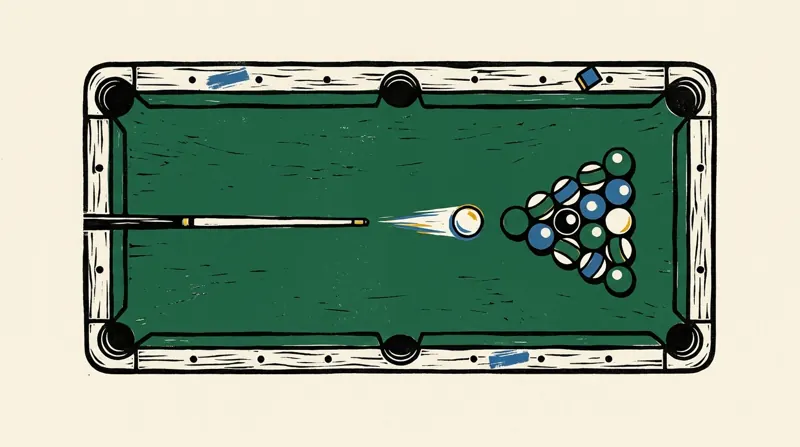 How to play 8-ball
 9-ball rules
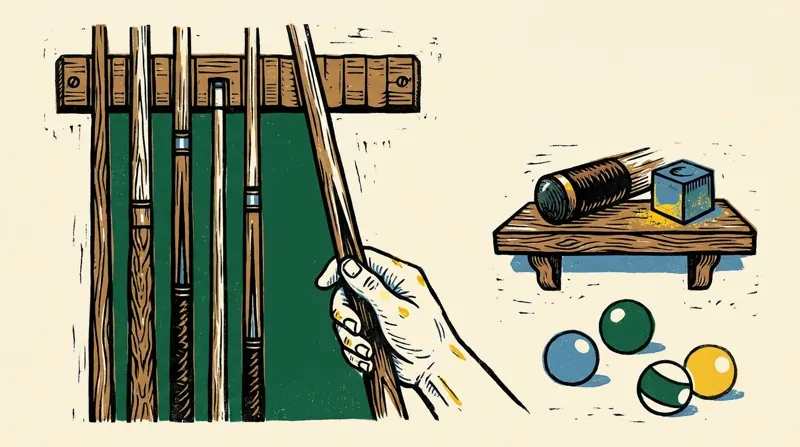 How to choose a house cue