Guide
Pool table sizes
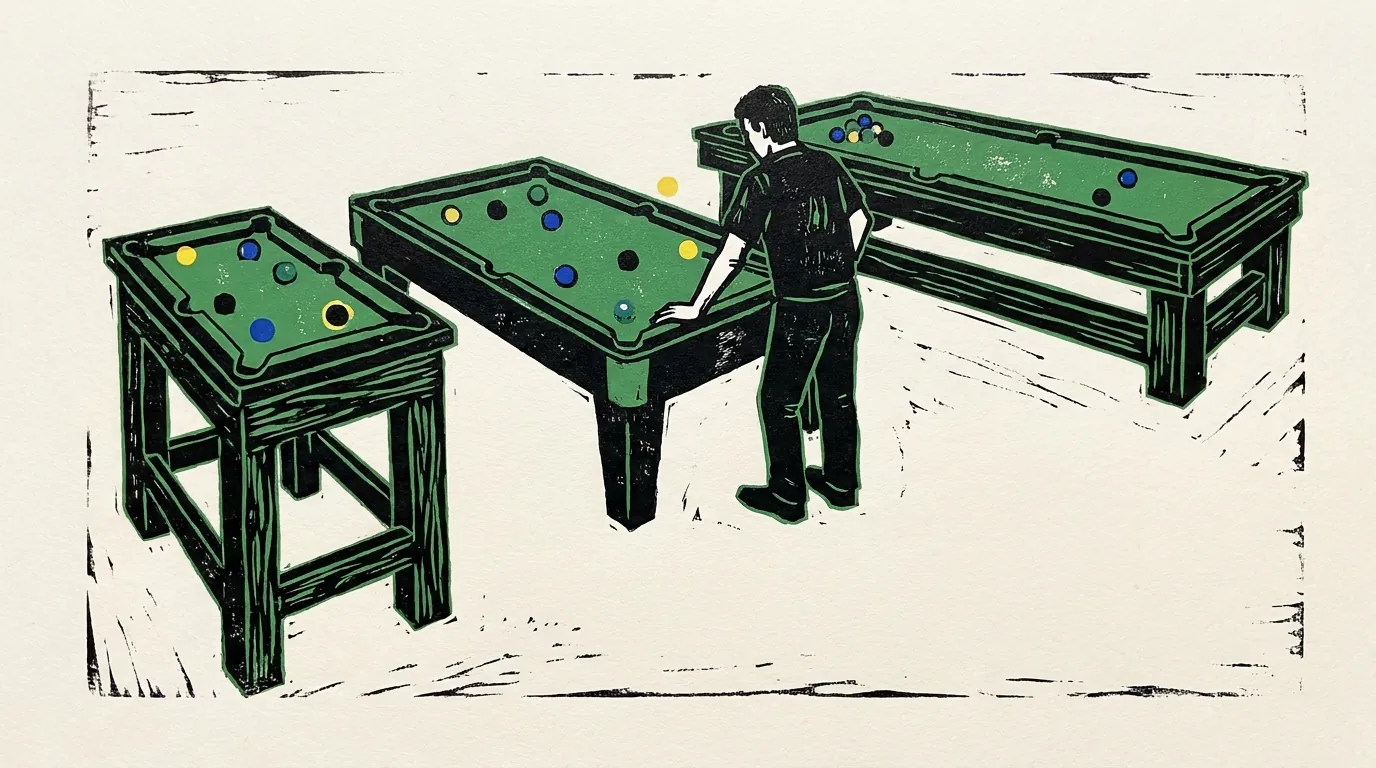
Pool tables come in three common sizes: 7-foot, 8-foot and 9-foot. The name is a rough length, not an exact measurement, and two tables called the same size can differ by a few inches. What matters most when you play is the playing surface: the cloth inside the cushions, measured from the nose of one cushion to the nose of the opposite one.
On a standard pool table the playing surface is twice as long as it is wide. That 2-to-1 shape is the same on every size, so the angles work the same way. What changes is distance, and distance changes the game.
The three common sizes
Typical playing surfaces
| 7-foot (bar box) | about 78 × 39 in, varies by maker |
| 8-foot | about 88 × 44 in |
| 8-foot "pro" (oversized) | about 92 × 46 in |
| 9-foot (tournament) | 100 × 50 in |
The outside of the table, rails included, is bigger than these numbers by the width of the rails on each side.
7-foot tables
The 7-foot table is the bar table, often called a bar box. Most are coin-operated: you pay, the balls drop out, and pocketed balls stay inside the table until the next game. Many coin-op tables use a cue ball that is a little larger or heavier than the object balls, or one with a magnetic core, so the table can send it back out after a scratch.
On a small table the balls are closer together, so the break spreads them less and clusters are more common. Shots are shorter, and a decent break can leave several balls near pockets. Bar 8-ball is mostly a 7-foot game.
8-foot tables
The 8-foot table is a common home size and shows up in plenty of pool halls. There are two versions: the standard 8-foot, and a slightly larger "pro 8" or oversized 8. It plays between the other two. If you mostly play at a bar and want to move up, an 8-footer is an easy step.
9-foot tables
The 9-foot table is the full-size table, the one people mean when they say "regulation" or "tournament" size. Professional pool and most major tournaments are played on 9-footers. Serious pool halls usually have a row of them.
The longer table spreads balls out, makes long shots longer, and gives you more room to move the cue ball. Missing position by a few inches costs more, and running a rack is harder.
Why tournaments favor 9-foot tables
There's no single law that says tournaments must use 9-foot tables, but bigger events tend to, for a few general reasons:
- It rewards skill. Longer shots and more room for the cue ball make shot-making and position play count for more, and lucky rolls count for less.
- The break is less decisive. On a small table a strong break can leave an easy run-out. On a 9-footer, that's less likely.
- It's the common standard. The professional game is played on 9-foot tables, so players preparing for tournaments practice on them.
League pool is a different story. Many leagues play at whatever tables their host bars and halls have, which is why so much league play is on 7-foot tables. Others play at pool halls on 9-footers. If you're joining a league, ask what size the home tables are and practice on the same size.
Does the size change the rules?
No. 8-ball, 9-ball and the rest use the same rules on every size table. What changes is strategy. On a bar box, a well-placed safety can lock up the table, and position play is about small distances. On a 9-footer, cue ball speed control matters much more. A player who's strong on one size may struggle at first on the other.
Pockets matter too. Pocket openings vary by maker and model, and some rooms have tables with tighter pockets than usual. A 7-foot table with tight pockets can play harder than you'd expect.
Snooker and other big tables
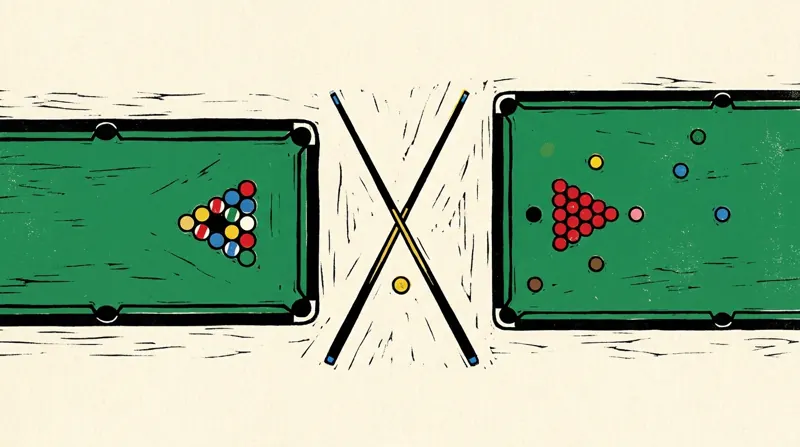
A full-size snooker table is much bigger than any pool table: about 12 feet long, with smaller balls and narrower, rounded pockets. Some US pool halls keep one or two. Read snooker vs pool for the differences, or see the places on our snooker page.
How much room does a table need?
A table needs space on every side for a full stroke. The standard way to work it out:
- Take the playing surface length and add two cue lengths. That's your minimum room length.
- Take the playing surface width and add two cue lengths. That's your minimum room width.
- Add a few inches more if you can, for your backswing.
Most full-length cues are around 57 to 58 inches. With 58-inch cues, the arithmetic works out like this:
Room size with 58-inch cues
| 7-foot (78 × 39 in) | about 13 × 16 ft |
| 8-foot (88 × 44 in) | about 13 ft 4 in × 17 ft |
| 9-foot (100 × 50 in) | about 13 ft 10 in × 18 ft |
Check your table's actual playing surface and do the math with your own numbers; it only takes a minute.
If one wall is a little tight, shorter cues help. Cues of about 48 or 52 inches are made for exactly this, and many home players keep one for shots near the wall. Watch for things that stick out into the room, too: a post, a doorway, a bar stool or a light fixture hanging low can block a stroke even when the floor space looks fine.
Picking a table at a pool hall
- Learning or playing casually? A 7- or 8-foot table is more forgiving.
- Practicing for a league? Play on the size your league uses.
- Practicing for tournaments, or playing 9-ball? Ask for a 9-footer.
Our 9-foot tables page lists places whose reviews or website mention them, and the bars with pool tables list shows where to find a bar box near you. When a listing gives a number of tables, it says where the number comes from, and we never estimate one.
 How to play 8-ball
 Snooker vs pool
 9-ball rules