Guide
Pool hall etiquette
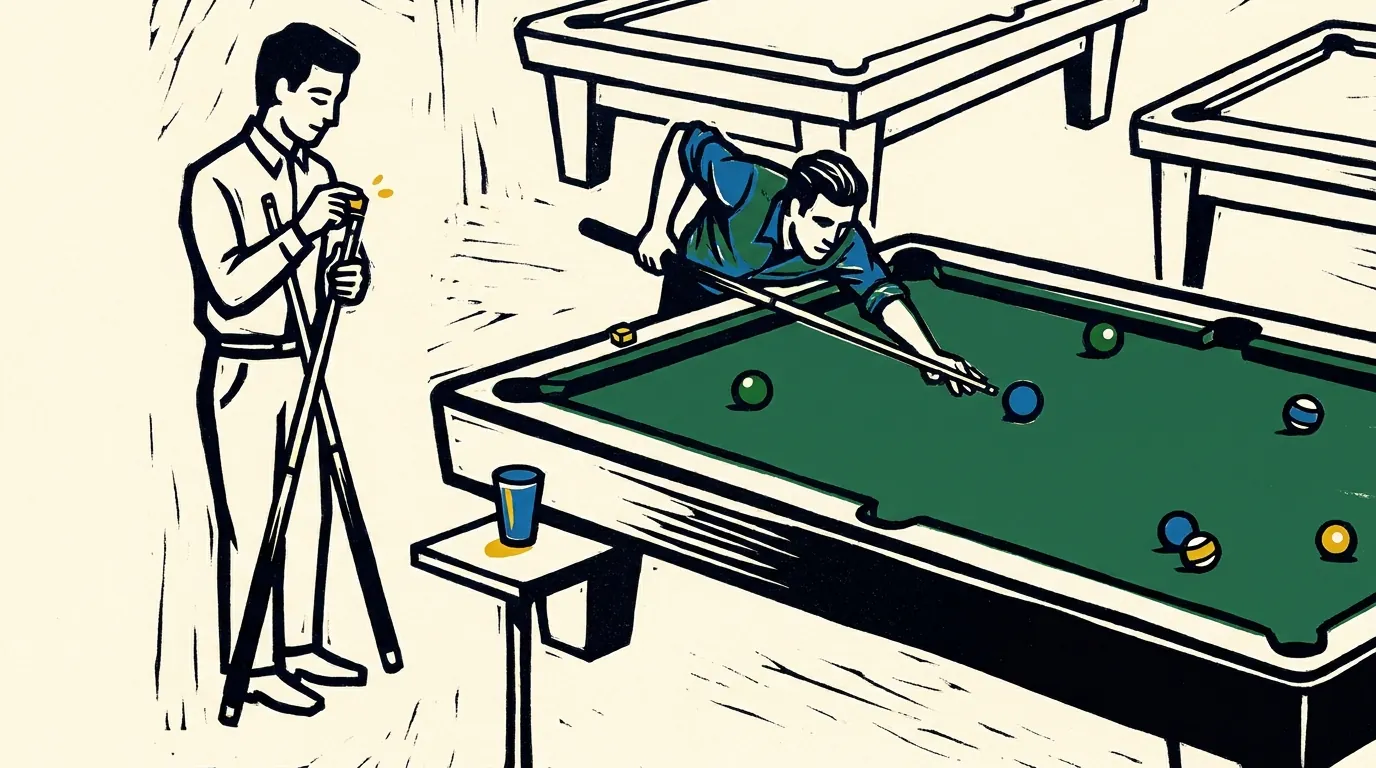
Pool rooms are relaxed places, but they run on a set of unwritten rules. Most of them come down to two ideas: don't distract someone who's shooting, and treat the table like it belongs to everyone who'll play on it after you. Follow the habits below and you'll fit in at a serious pool hall or a neighborhood bar.
Getting a table
How you get a table depends on where you are.
- Pool halls usually rent tables by time. You check in at the counter, they assign a table and hand you a tray or rack of balls, and you settle up when you're done. Return the balls to the counter when you leave. Some halls take reservations; call ahead on a busy night.
- Bars often have one or two coin-operated tables. The common custom is that you claim the next game by putting your coins on the rail or writing your name on a chalkboard. The winner of each game stays on and plays the next challenger.
If you're not sure how a place does it, ask the bartender or the person at the counter. Don't just walk up and rack when other people are waiting.
Waiting your turn
On a bar table, wait for the current game to finish. Don't put your coins in or start racking while balls are still on the table. If the people playing are a group of friends who've been there all night, it's fine to ask, politely, whether you can play the winner.
At a hall where tables are rented, the table is theirs for as long as they're paying for it. If the room is full, ask the counter about the wait rather than hovering by someone's table.
While someone is shooting
- Stay out of their line. Don't stand in front of the pocket they're aiming at, or directly behind the ball they're shooting at, where you're in their field of view. Step back from the table.
- Hold still and stay quiet. Don't talk to a player while they're down on a shot, and don't move around at the edge of their vision.
- Sit down if you can. In many rooms, the player who isn't shooting sits or stands back by their chair. It keeps you out of the way and makes it clear whose turn it is.
- Don't coach someone else's game unless they ask.
The same goes for the next table over. If a player on the next table is down on a shot and your stroke would bring your cue into their space, wait. Whoever got down on their shot first goes first. A quick "go ahead" keeps things friendly.
Drinks and food stay off the table
Never set a drink on the rail or on the table. One spill can stain or warp the cloth, and wet spots make balls roll off. Use the drink rail, a side table or the shelf most rooms put next to each table. Keep food away from the table too, and wipe greasy hands before you pick up a cue or a ball.
Don't sit on the table, lean your whole weight on it, or set bags, jackets or phones on the bed. If a shot is a long reach, use the bridge instead of climbing onto the rail.
Chalk
- Chalk your tip away from the table, so the dust doesn't fall on the cloth.
- Use a light brushing motion around the tip rather than grinding the cue into the chalk.
- When you put chalk down, set it on the rail with the chalked side up, or in the chalk holder. A chalk cube left face down marks the rail, and one left on the bed of the table can get hit.
- If you borrow chalk from the table, leave it where you found it when you're done.
House cues
House cues are shared by everyone, so treat them like it.
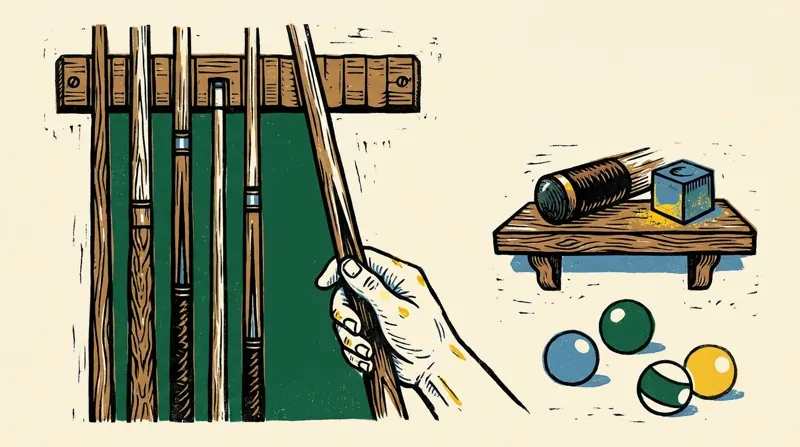
- Pick one that's straight and has a usable tip. Here's how to check.
- Put it back in the rack when you're done. Don't lean cues against a wall or the table, where they can fall, get stepped on or warp over time.
- Don't bang the butt on the floor to celebrate or hit the table in frustration.
- Ask before you jump. Jump shots and hard massé shots can tear the cloth, and some halls don't allow them at all, or not with house cues.
Bringing your own cue is normal at a pool hall and fine at most bars. If you do, keep it in its case when you're not using it, and don't leave the case where people trip over it.
Sharing tables when it's busy
- Don't practice on a crowded bar table. Solo drills are for quiet nights or a rented table at a hall.
- Play at a reasonable pace. Walk around and look at a shot, but don't take minutes over every one when people are waiting.
- On a challenge table, accept a challenger. If you win, you stay on, but you play whoever's next.
- Respect league nights. Many rooms set aside tables for leagues on certain nights. Those tables aren't open to walk-ins. See how to join a pool league if you'd like to be on one of them.
Sportsmanship
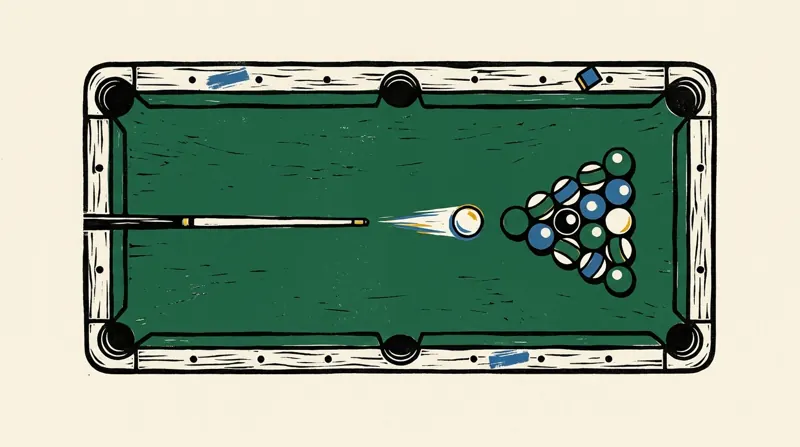
- Agree on the rules before the first break. Bar and house rules vary a lot, especially on scratches and the 8-ball. Our 8-ball guide lists the usual points of disagreement.
- Call your own fouls. If you touched a ball or the cue ball barely missed, say so. People remember who does.
- Ask before you touch a ball that might be in play, and ask your opponent to watch a close hit if you think it could be a foul either way.
- Don't celebrate their misses. Saying "good shot" or "nice game" costs nothing.
- Rack fairly. If you're racking for your opponent, make the rack tight. A loose rack on purpose is a quick way to lose a game partner.
- Shake hands at the end of a match, win or lose.
Before you go. Some rooms are 21 and over, or are only at certain times, and some ask players to follow a dress code. We don't list hours or table rates, so call ahead. Every place on poolhalls.org shows its phone number and website.
Looking for a place to put this into practice? Browse pool halls by state, or find a neighborhood spot on our list of bars with pool tables, where each bar is shown with the review or website line that proves it has one.
 How to choose a house cue
 How to play 8-ball
 Pool table sizes