Guide
Snooker vs pool
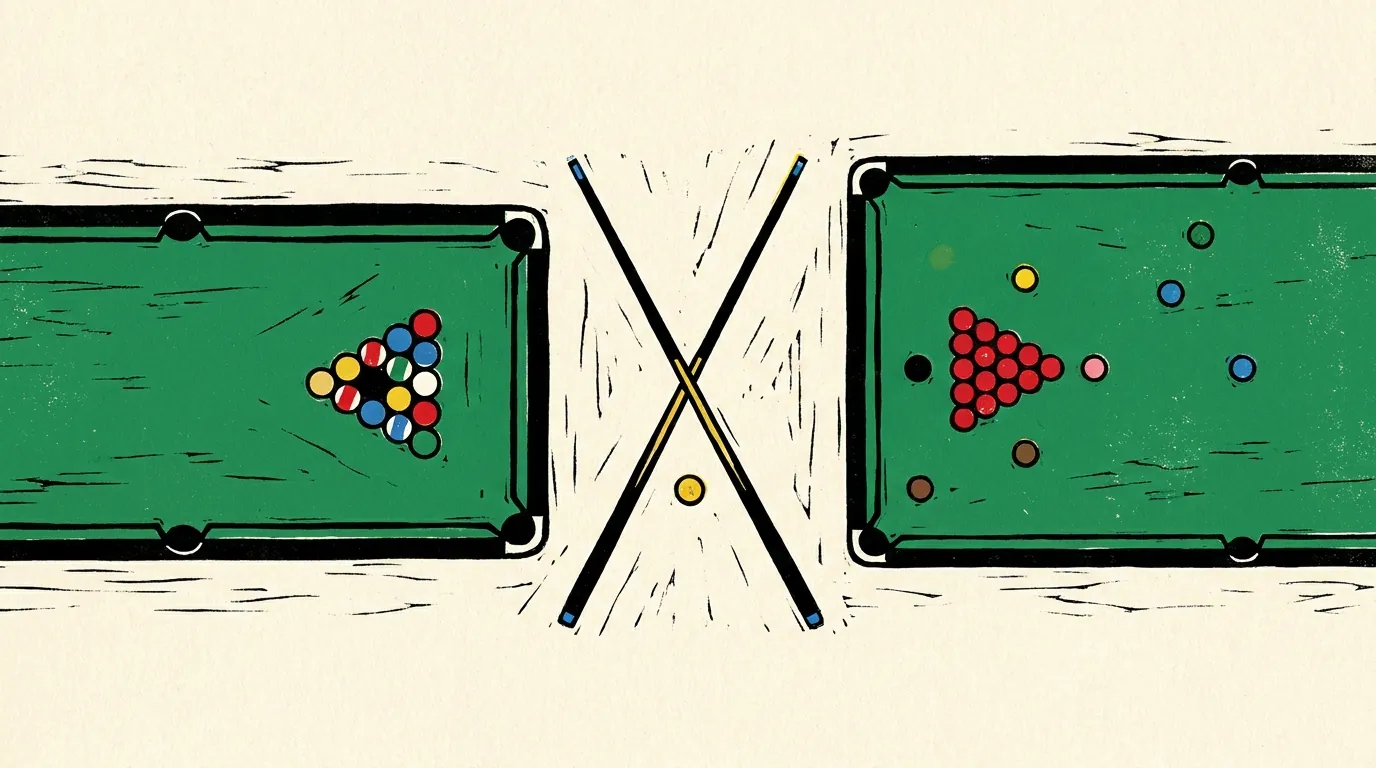
Snooker and pool are cousins. Both are played with a cue and balls on a cloth-covered table with six pockets, and the basic stroke is the same. But they feel like different games. A snooker table is far bigger, the balls are smaller, the pockets are tighter, and the game is scored by points rather than won by sinking one key ball.
In the US, pool is everywhere and snooker tables are uncommon. Some pool halls keep one or two. Here's how the two compare.
At a glance
Snooker vs pool
| Table | Snooker: 12 × 6 ft full size. Pool: 7, 8 or 9 ft |
| Balls | Snooker: 22, smaller. Pool: 16 in 8-ball, 10 in 9-ball |
| Pockets | Snooker: narrow, rounded openings. Pool: wider, angled jaws |
| Scoring | Snooker: points. Pool: win by pocketing the 8 or 9 |
| Cue tip | Snooker: smaller. Pool: larger |
The table
A full-size snooker table is 12 feet by 6 feet, with a playing area of about 11 feet 8½ inches by 5 feet 10 inches. The biggest common pool table, the 9-footer, has a playing surface of 100 by 50 inches. A snooker table has a lot more cloth to cover. Smaller snooker tables exist, but the full-size table is the standard for the real game.
The markings differ too. A snooker table has a straight line across one end, the baulk line, with a half-circle on it called the D. The cue ball starts in the D. Pool tables have a head string and a foot spot, usually marked only by the diamonds on the rails and a small spot on the cloth. For more on pool table sizes, see pool table sizes.
Cloth
Snooker cloth usually has a nap, a direction to the fibers like velvet, which can slightly change how a slow ball rolls depending on which way it travels. Most pool tables use a smooth, napless cloth that plays the same in every direction.
The balls
Snooker balls are smaller than pool balls: 52.5 millimeters across, against 2¼ inches (about 57 millimeters) for pool. A snooker set has 22 balls:
- the white cue ball;
- 15 reds, worth 1 point each;
- six colors: yellow (2 points), green (3), brown (4), blue (5), pink (6) and black (7).
At the start, the reds are racked in a triangle near the far end, and each color sits on its own spot: yellow, green and brown on the baulk line, blue in the middle of the table, pink just in front of the reds and black near the top cushion.
Pool uses a cue ball and numbered balls: 15 numbered balls for 8-ball (seven solids, seven stripes and the 8) and nine for 9-ball.
The pockets
Snooker pockets are narrow, and the cushions curve smoothly into them. A ball has to be hit accurately to drop, and a ball that clips the edge of the opening often stays out. Pool pockets are wider compared with the ball, and the cushions meet the pocket at an angle (the jaws). Pool pockets still vary a lot from table to table, but snooker pockets are tighter by design.
Put a bigger table together with smaller pockets and you get long, demanding pots. That's a big part of why snooker feels so different to a pool player.
The cues
Snooker cues usually have a smaller tip than pool cues, often with a brass ferrule, and many are made of ash. Pool cues have larger tips, usually on a maple shaft. The smaller tip suits the smaller balls. You can play either game with either cue, but each feels a little off on the other table.
Both games use a mechanical aid for long reaches. Pool players call it a bridge; snooker players call it a rest, and snooker rooms often have several shapes for different situations.
How the games are scored
Snooker
Snooker is a points game. Each game is called a frame.
- While reds are on the table, you must pot a red first. Pot one and you score 1 point, then you may pot any color for its value.
- After a color goes in, it's put back on its spot, and you go back to the reds. Your turn, called a break, keeps alternating red, color, red, color until you miss.
- Once all the reds are gone, the colors are potted in order of value, yellow through black, and they stay down.
- The player with more points when the frame ends wins it. Matches are played over a set number of frames.
Fouls give points to your opponent instead of ball in hand: at least 4 points, or more if a higher-value ball was involved, up to 7. A player who leaves the cue ball where the opponent can't hit the target ball directly has "snookered" them, which is where the everyday phrase comes from. The highest possible break in standard play, all 15 reds with the black each time and then all the colors, is 147.
Pool
The common pool games aren't scored by points. In 8-ball, you pocket your group, solids or stripes, then the 8-ball. In 9-ball, you must hit the lowest ball first, and whoever pockets the 9 wins. Matches are usually a race to a set number of games. Straight pool, also called 14.1, is the main pool game that counts points: one for each ball you pocket.
Fouls in pool usually give the opponent ball in hand, the right to place the cue ball anywhere, rather than points.
Which is harder?
They test different things. Snooker's big table and tight pockets demand very accurate long potting, and because a frame can go on for a long time, it rewards patience and tactics. Pool moves faster, the pockets forgive more, and the challenge is running the table and controlling the cue ball in a smaller space. Strong players of one game usually need time to adjust to the other.
A note on "billiards"
In the US, "billiards" is often used as a general word for pool, which is why so many pool halls are named billiards rooms or billiards clubs. Strictly speaking, billiards also covers games like carom billiards, played on a table with no pockets, and English billiards, a different game from both snooker and pool.
Where to play snooker in the US
Snooker tables need a lot of floor space, so few rooms have them. The ones that do are usually larger pool halls with one or a few tables set aside. Our snooker page lists places whose customer reviews or own website mention snooker, with the review sentence or website note shown for each. Call ahead to check that a table is free and in play before you make a trip.
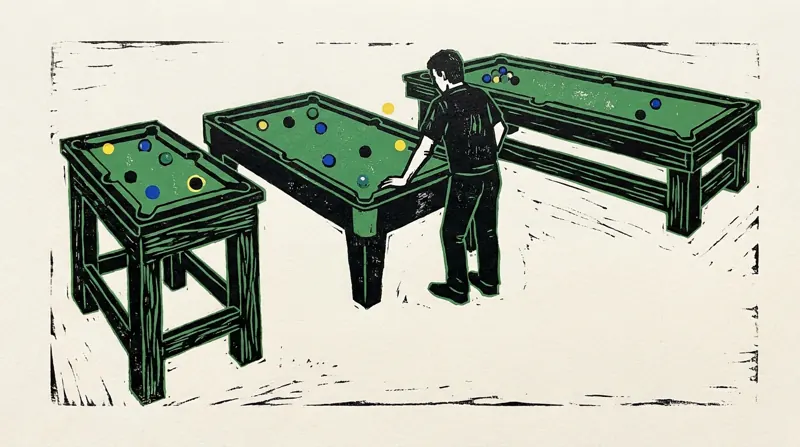 Pool table sizes
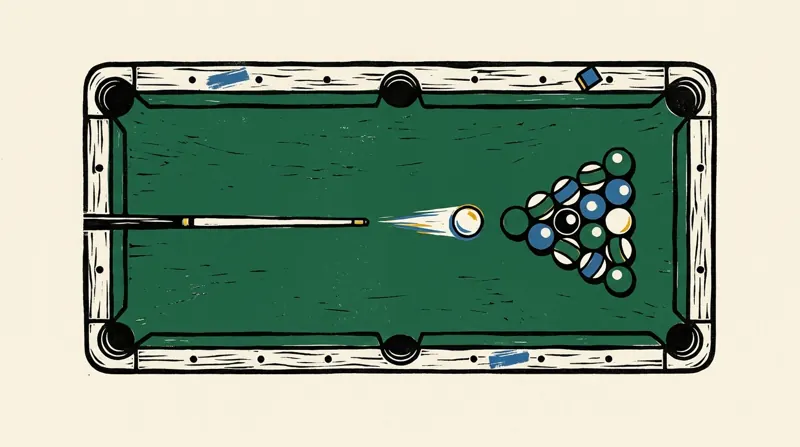 How to play 8-ball
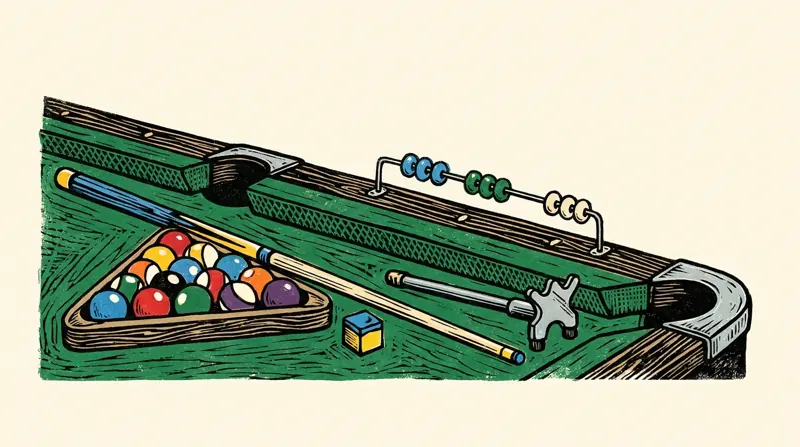 9-ball rules